






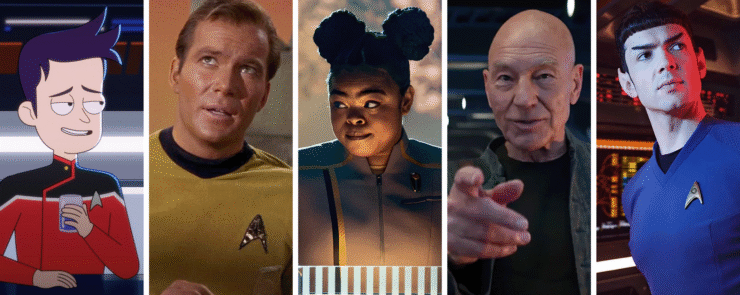
The first seasons of Star Trek shows have a reputation for being pretty, pretty bad. It’s not a trend that is quite as culturally entrenched as the “even-numbered Star Trek movies are good, odd-numbered Star Trek movies are bad” notion, but it’s a widely established idea that is… well, not entirely untrue.
But much like the aforementioned perception of trends in Star Trek movies, the belief that every (or even most) first seasons of a Star Trek show is simply awful is simply not true. In those debut seasons, we more often find a messy blend of the fascinating and the inexplicable. These are seasons that do what TV shows used to be able to do: figure things out over time. And while Star Trek certainly has a few debut seasons that are largely responsible for cultivating that reputation over the years, there are a few Star Trek debut seasons that are not just better than the pack but feature some of the best things that this cornerstone sci-fi franchise has offered the world.
12. Star Trek: The Next Generation
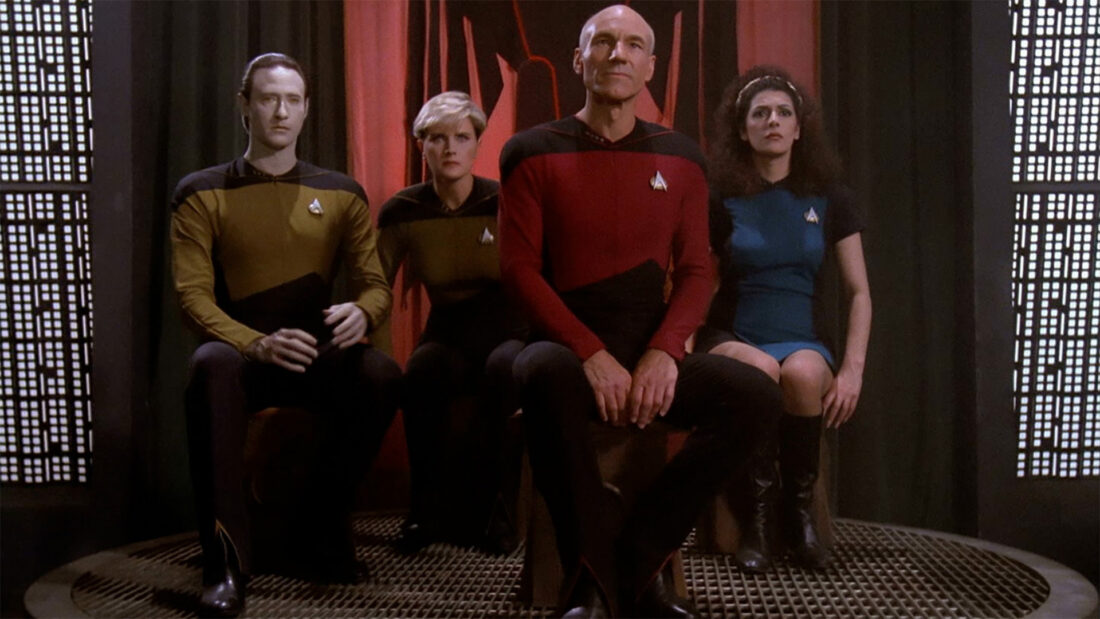
Truth be told, there was a version of this article that had The Next Generation near the bottom of this list but certainly not in first place. The argument for the season as a whole isn’t based on its quality but rather its status as a cultural artifact. TNG’s first season perfectly represents the strange series of circumstances and contributions that led to its creation, and it is undeniably fascinating to examine this season in the context of what this series would become. There are even a few good ideas sprinkled throughout and a ton of big creative swings.
Then you remember episodes like “Code of Honor” and “Angel One.” TNG’s first season features episodes so offensive and bewildering that even the franchise’s most die-hard bad-faith operators can’t wave them away with a dismissive “twas the times.” Indefensible as simple concepts, those episodes are also painfully hard to watch from sheer entertainment and craft perspectives. They are some of the lowest lows in a franchise that has fallen on its share of hard times.
The thing that truly separates this season, though, is that it never climbs far enough away from those lows as other first seasons of Star Trek shows often do. It’s as if the idea was to get every awful Star Trek idea out of the writers’ systems and onto television so that fans and critics would treat the show’s second season as not just an improvement but a swallow of water offered to a dying man. You can certainly argue for the merits of episodes like “The Big Goodbye” and “Conspiracy,” but I challenge anyone to watch this entire season and not feel a growing sense of dread whenever that “Next Episode” button appears.
11. Star Trek: Picard
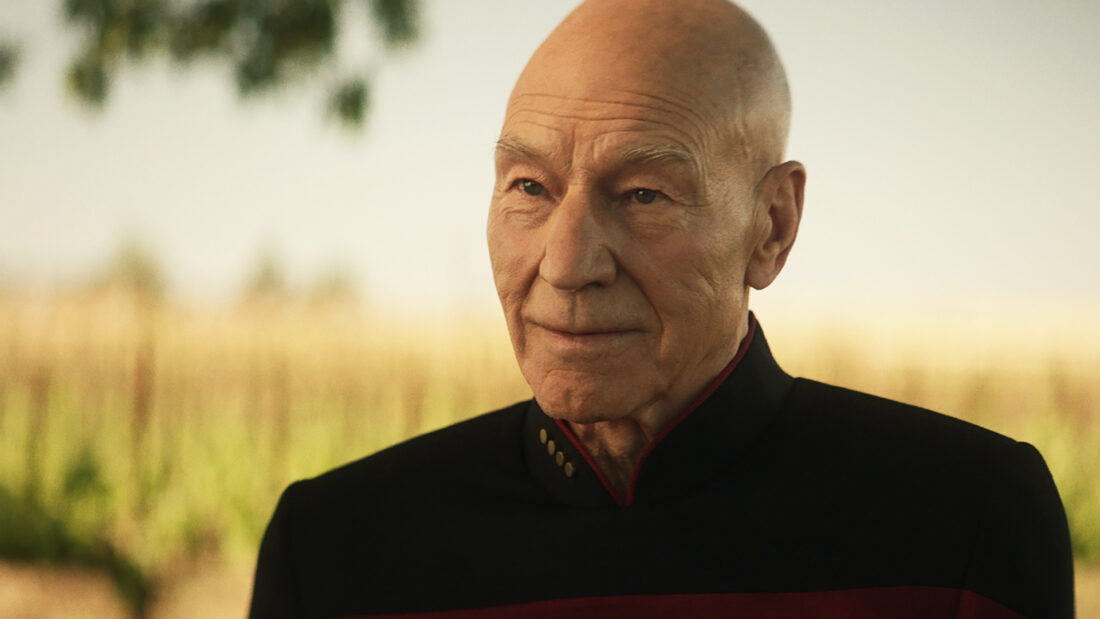
Going into Picard, I remember wondering what the show was actually going to be. Not its premise, mind you, but rather how the show was going to function episode-to-episode. Would it be a tribute to TNG? Would it try to fit more cleanly into the modern era of Star Trek? Would it be something else entirely? There is a dark comfort in realizing that the series’ writers endured a similar struggle.
On paper, Picard is a fascinating examination of what happens to a legend when he has to deal with growing old in a world he helped shape but no longer entirely recognizes. While that is very much a part of the series, this season never seems to think that is quite enough. Instead, it explores about 10 subplots too many while trying to tell a messy serialized story trapped in a mystery box.
The fundamental flaw of Picard‘s first season is that it rarely offers a fully entertaining version of its many ideas, much less the best versions of them. It is certainly not on the level of the prestige dramas it attempts to emulate, nor is it an especially fun time, even from a guilty pleasure standpoint. It admirably tries to deconstruct some of the series’ mythos and traditions, but it still relies on too much nostalgia for its own good. There are good moments and ideas spread throughout, but this season felt like a show without a home.
10. Star Trek: Enterprise
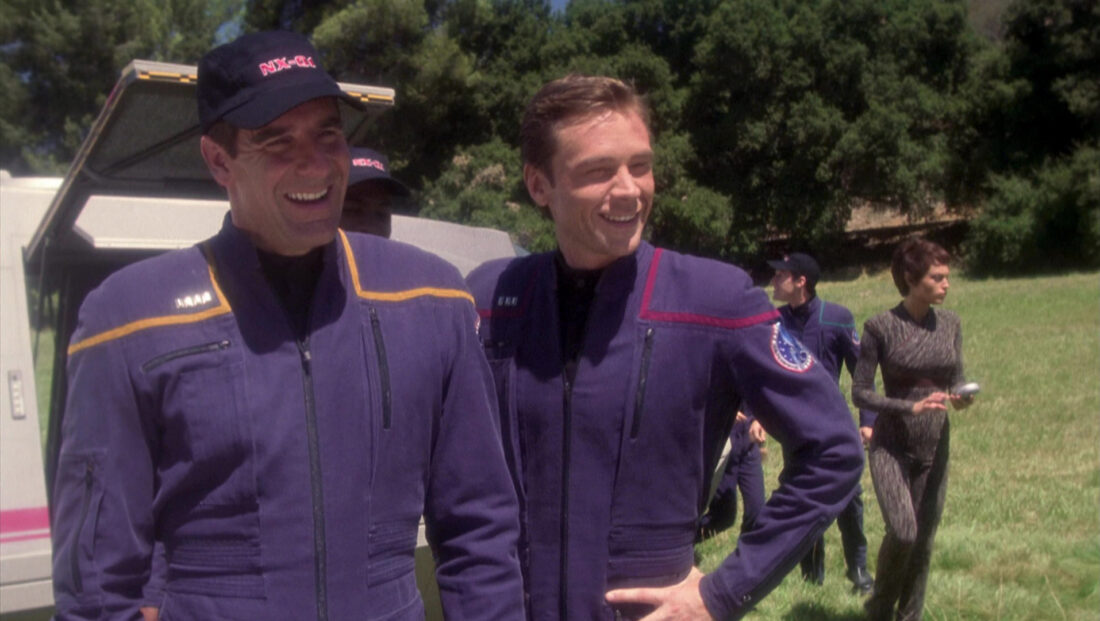
Enterprise is the most difficult first season of Star Trek to fairly rank. Like many Star Trek first seasons, it is ultimately a blend of good and bad. Like many Star Trek first seasons, it indeed pales in comparison to what the show would eventually become. This, in theory, puts it solidly in the middle of the pack (at least) with some of the contemporaries of its broadcast era.
The big problem is that the first season of Enterprise often works best as an idea rather than as a show you actually want to watch. It is absolutely fascinating to see the 22nd-century travels of the Enterprise and its crew of true explorers. Deprived of so many of the conveniences (not to mention knowledge) later generations would benefit from, they must navigate challenges that may seem at least vaguely familiar to us but are often more wondrous to them.
You probably identified the problem with that description, though. The first season of Enterprise is often mundane in a way that is only conceptually entertaining relative to the show’s premise. Its uses of time travel and the Temporal Cold War offer moments of excitement that are quickly lost in the realization that this young series can’t quite juggle such lofty ideas that otherwise compromise its more pleasantly humble nature. Though the season is never quite as bad as its theme song (how could a season that features episodes like “Dear Doctor” be?), it leaves you wanting to love it more often than it lives up to a fraction of its potential.
9. Star Trek: The Animated Series
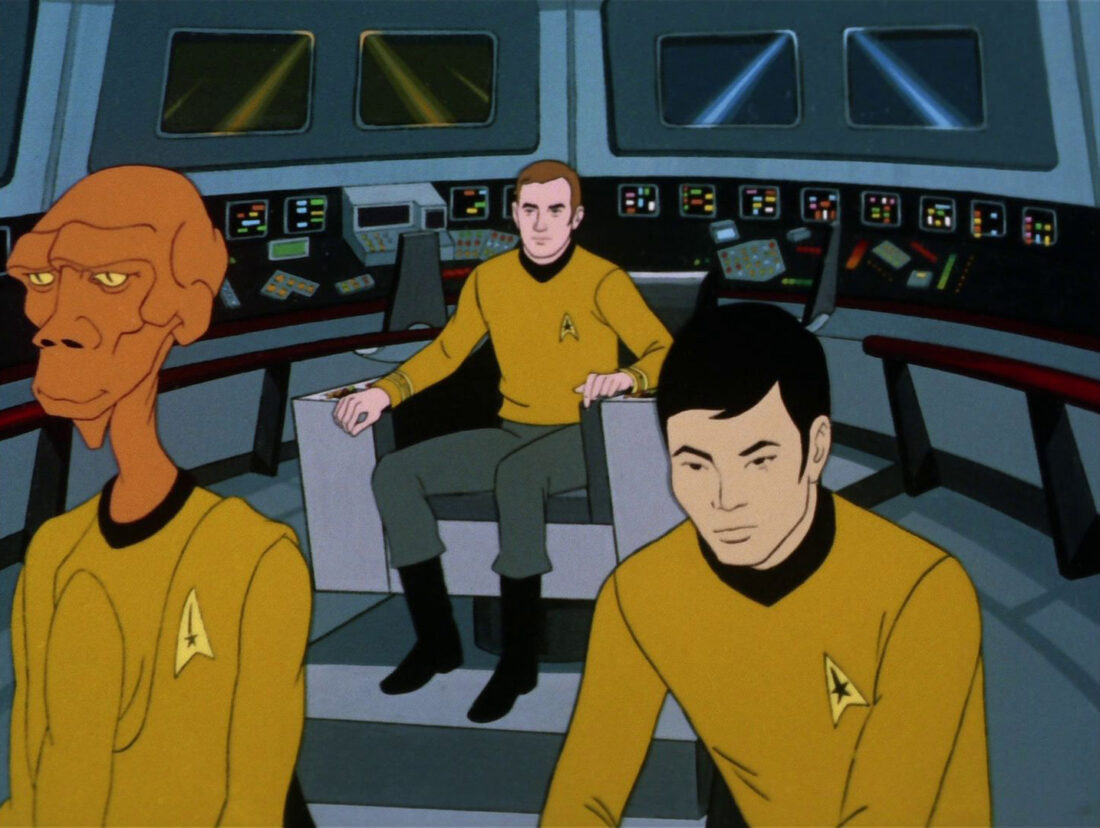
One does not simply ask if Star Trek: The Animated Series is “good.” Such words carry no weight when you’re discussing a series that has always been (and will forever remain) an oddity above all else. “The continuing animated adventures of the Enterprise crew” feels like an idea that would have been introduced in the heyday of the ‘80s animated series boom. Instead, this show was released during the considerably odder period of ‘70s animation and features all the charms and oddities one often finds in that era.
The Animated Series’ greatest strength and weakness is its proximity to The Original Series. Some of the first season’s best episodes (most notably “Yesteryear” and “More Tribbles, More Troubles”) are essentially continuations/re-imaginings of some of TOS’ best episodes. Fans of any era of Star Trek should seek these episodes out as they best represent the incredible potential of this idea. It is an unbelievably faithful take on the TOS mythos that features that show’s main creative and cast members exploring an entirely new frontier.
Unfortunately, that is also part of the problem. The Animated Series rarely accomplishes much on its own when it’s not drawing from some of TOS‘ best episodes and ideas. You absolutely see the benefits of using animation to tell a Star Trek story, but those benefits are largely limited to the environments and alien designs. While I don’t want to belittle those accomplishments (TAS even features the first appearance of a holodeck-like room), this season rarely speaks with its own voice loudly enough to rise above the level of surprisingly solid novelty.
8. Star Trek: Starfleet Academy
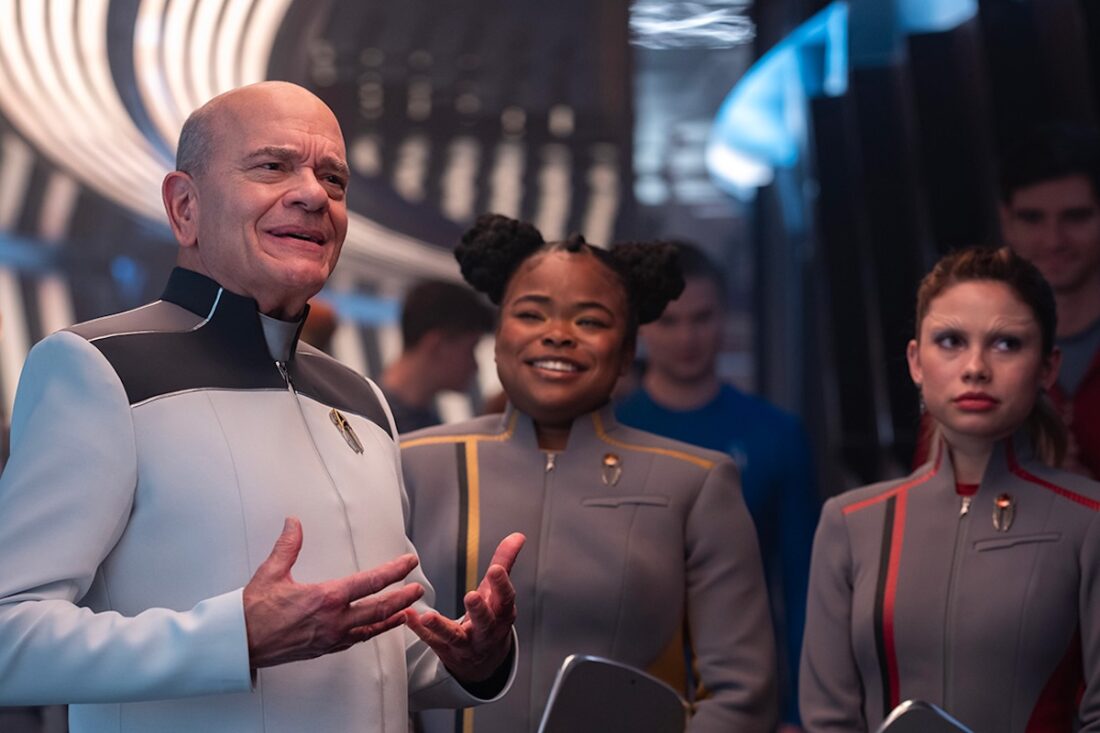
Our first good look at Starfleet Academy came through trailers that are, admittedly, pretty awful. We soon learned they teed up early episodes that are not quite as bad as the previews suggested but are certainly not great. I can’t abide those who never gave this show a chance based on conspiracies that it represents an imagined political agenda, but I also can’t criticize those who never gave this show a chance on the basis of its bad first impression.
What’s remarkable about Starfleet Academy is that it actually finds and largely maintains its footing after stumbling out of the gate. We’re used to seeing first seasons of Star Trek shows that vary wildly between awful and brilliant. We’re not as familiar with a first season of Star Trek that actually gains and maintains momentum as it goes along. What’s more, that momentum makes the most out of the series’ core (and great) premise. Whether the show is exploring the franchise’s past in “Series Acclimation Mil” or escalating its own stakes in “Come, Let’s Away,” it often stays rooted in the idea that we are watching kids work their way through a legendary academy and grow in the process.
No, Starfleet Academy doesn’t follow the “random adventures and serial episodes” structure as well as other first seasons we’ll soon discuss. But it is so much more interesting than it may ever get full credit for.
7. Star Trek: Discovery
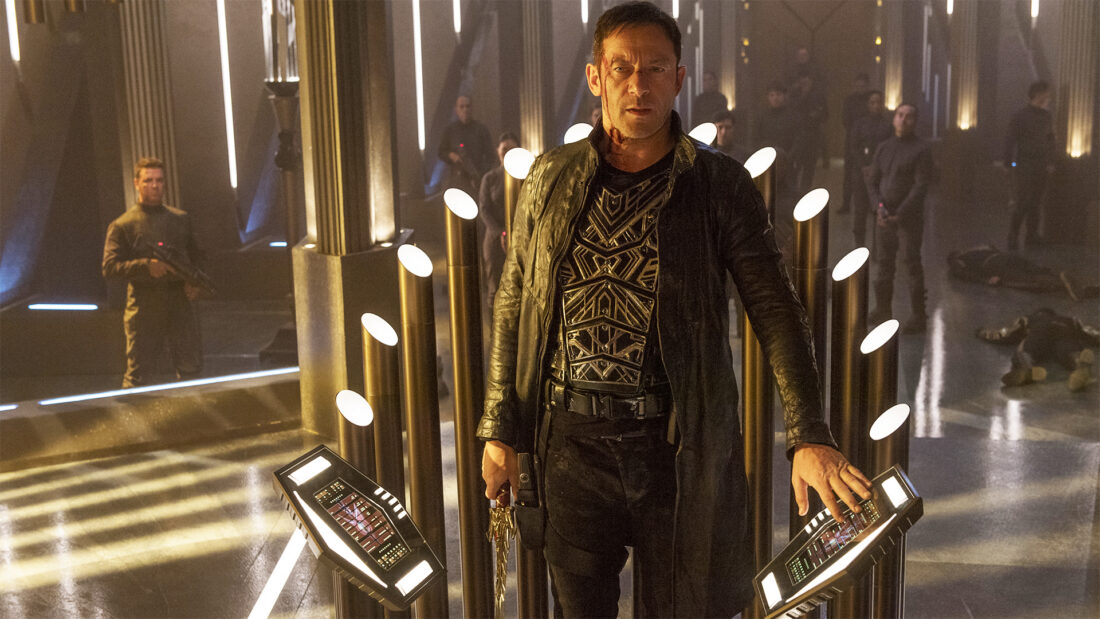
Like Picard, the first season of Discovery largely suffers from its place in Star Trek history. This was a time of reinvention and experimentation for the Star Trek franchise. While hardly a bad thing (it is, in fact, often a great thing), we are often forced to witness the failed experiences as well as the good or even just interesting ones. What we are left with are shows that don’t always know what they want to be but do know they don’t want to simply be “more Star Trek.”
Even early on, though, Discovery works as its own thing so much better than the debut season of Picard did. Yes, it often draws from the series’ well when it comes to its lore and callbacks. Who doesn’t dream of telling a story in that space? More often than not, though, Discovery feels like a very different, but effective, sci-fi series that also so happens to focus on the adventures of a crew boldly exploring the galaxy.
Is it among the very best Star Trek first seasons much less Star Trek series? Clearly not. Will it please those going in looking for more classic Star Trek stories? We’ve seen that it certainly may not. But the show’s messiness is baked into its storytelling in a way that you won’t find in lesser first seasons. Anchored by the excellent Sonequa Martin-Green, Discovery’s first season is ultimately about flawed people making questionable decisions in incredible scenarios. Even if its many (sometimes too many) plots don’t quite land for you, you can at least see they are more than half-baked ideas whipped up at 4:30 on a Friday to help fill out a 22-episode season.
6. Star Trek: Voyager
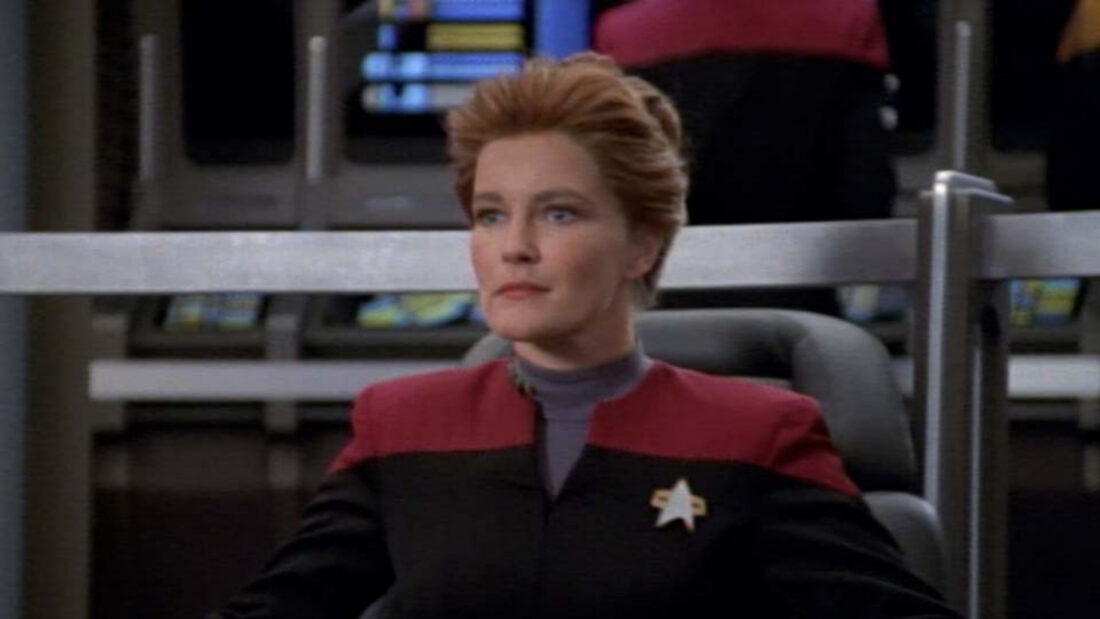
Writing about the first season of Star Trek shows is really an exercise in finding new ways to say “inconsistent.” Despite their reputation for being generally awful, only a few of Star Trek’s debut seasons truly deserve that tag. Most are just manic mixes of the unspeakable and the undeniable.
In that sense, Voyager’s otherwise seemingly boring consistency is actually one of its most unique qualities. From the moment we watch Voyager get flung far off course and begin its long journey home, we are treated to a series of adventures that rarely scrape this series’ highest highs but do establish a firm foundation that the show would gradually stumble off of and wouldn’t find again until season three or four.
Watching first seasons of Star Trek shows often requires you to occasionally glance at the window and stare so far off into the distance you can practically see better days. Watching the first season of Voyager is actually just a pretty fun time.
5. Star Trek: Deep Space Nine
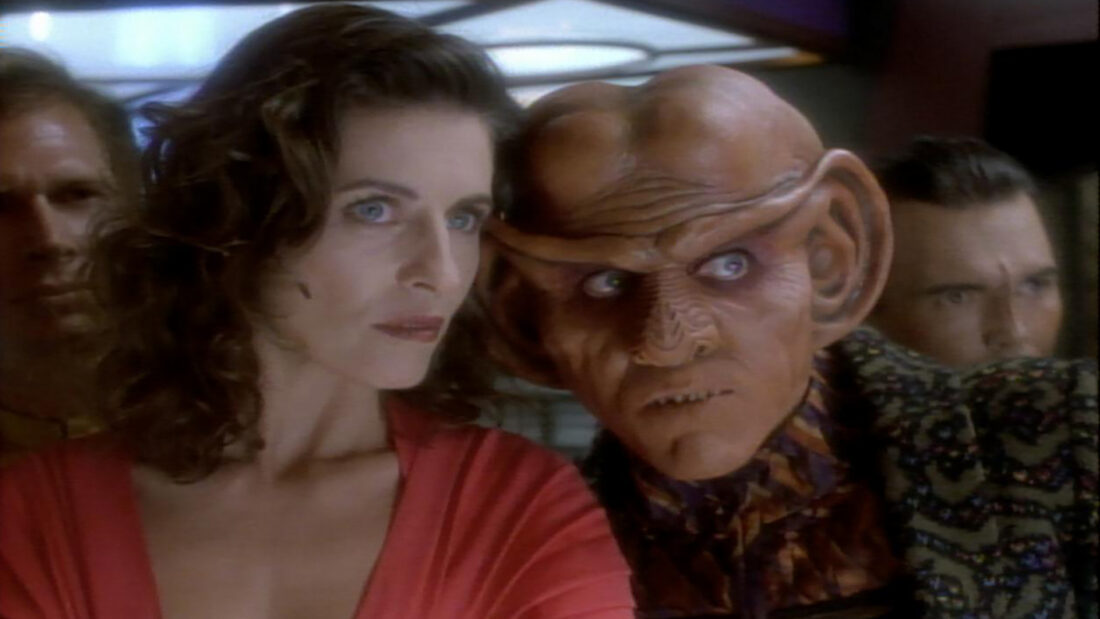
With the notable exception of The Next Generation, Deep Space Nine is the ultimate example of a Star Trek show with a first season that represents barely a fraction of what the series would eventually become. Trying to convince someone that this is the start of arguably the best Star Trek series and one of the best sci-fi TV shows ever is a tall, tall task.
And while it is impossible to watch this first season again without the knowledge of what this show will become, time has made it easier to see Deep Space Nine’s vision early on. Characters are not as nuanced as they will eventually be, nor are the plot points as ambiguous and mature as they would become (or even could have been at the time). But when you look for the signs, you can find them. When you’re not looking for the signs, you can still enjoy a motley crew of misadventures bolstered by something truly great.
It is indeed episodes like “Duet,” “In the Hands of the Prophets,” and “Emissary” that elevate Deep Space Nine‘s inaugural outing. They reveal something truly great in such a clear way that they force you to realize that this season is, above all, a playful exploration of possibilities delivered by a team obviously filled with talent.
4. Star Trek: Prodigy
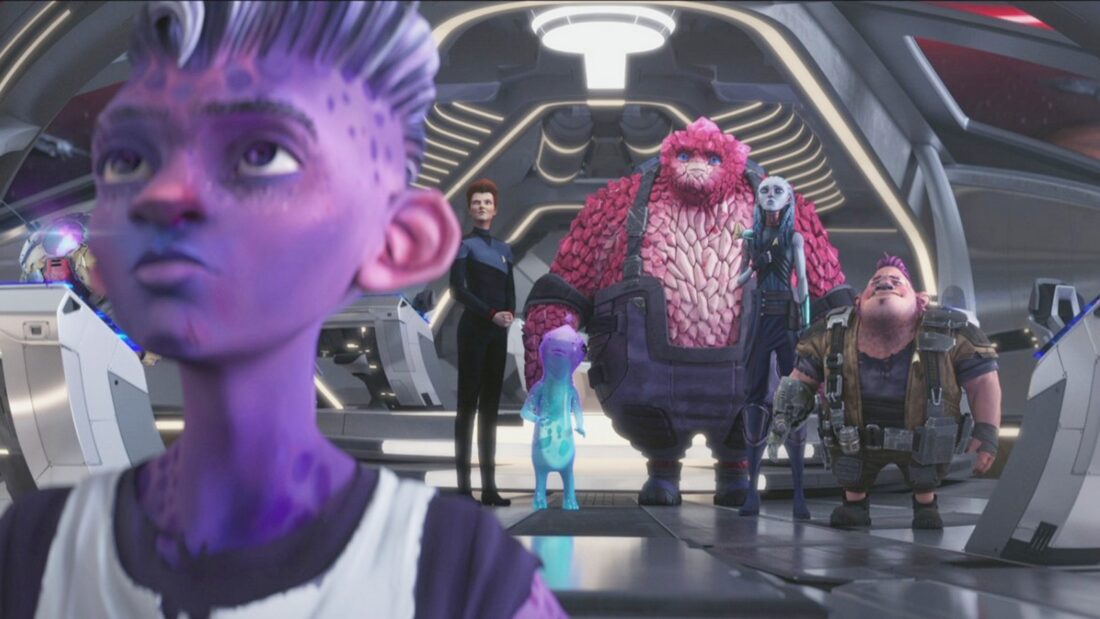
Aside from The Animated Series, I’m willing to bet that Prodigy is the least-watched Star Trek show in most circles. Released at a somewhat strange time for the franchise and obviously intended for younger audiences, it is certainly the Star Trek show that simply feels easiest to skip at a glance.
Happily, though, Prodigy’s first season wastes no time in showing you what you are missing. First off, this story of a ragtag group that finds and takes over a starship they use to explore the galaxy is not nearly as “childish” (a phrase I often utter through gritted teeth) as it may appear to be. Actually, its more playful nature gets at the heart of the “classic” Star Trek shows that so many fans claim to yearn for (even if it has more of a dash of Star Wars tossed into the mix). It rarely takes itself seriously. When it does, it delivers moments and stories that feel so much more impactful because they are weighed against a show that is often so effortlessly enjoyable to watch.
It is a shame that we will probably never get more than the two seasons of Prodigy we have. Whereas other Star Trek series got the time to find their identity even after notoriously bad starts, Prodigy didn’t need time to live up to its potential because it realized it pretty much out of the gate.
3. Star Trek: Lower Decks
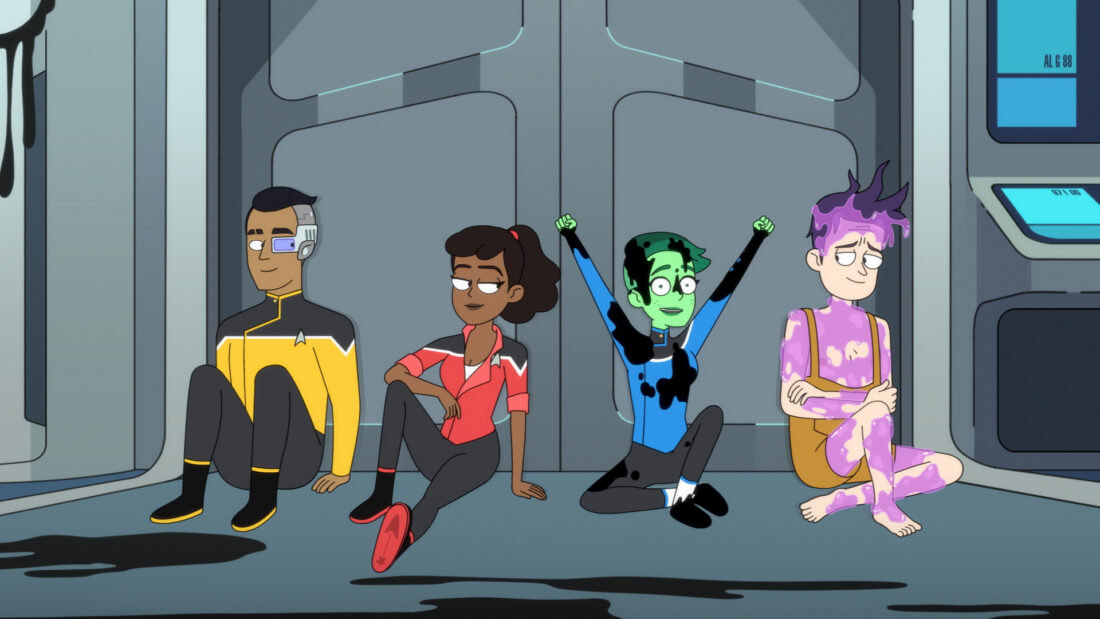
Lower Decks remains something of a miracle. It is very easy to imagine a version of this animated series that relies too much on the cynicism of a Rick and Morty or the chaotic comedy of a Seth MacFarlane joint. For that matter, it’s easy to imagine this story of the “other” crewmembers of a starship delivering a lesser version of MacFarlane’s own The Orville.
Instead, Lower Decks is quite simply one of the best Star Trek series ever. It realizes the potential of The Animated Series by delivering incredible scenarios that would otherwise be impossible to imagine in other media or ones that simply wouldn’t have worked as well. More importantly, the show doesn’t solely rely on being zany. We not only come to love its genuinely funny characters; we get to watch them grow in ways that you would never expect from a show that billed itself as an “adult comedy” at a particularly strange time for that subgenre.
Bucking yet another Star Trek tradition, Lower Decks also delivers all of that in a debut season that stands tall even with the knowledge of where this show is going and what it will become. Lower Decks set a standard for more modern Star Trek series that would benefit much of what followed, including a series that gleefully stood on its shoulders to reach new heights in its debut season.
2. Star Trek: The Original Series
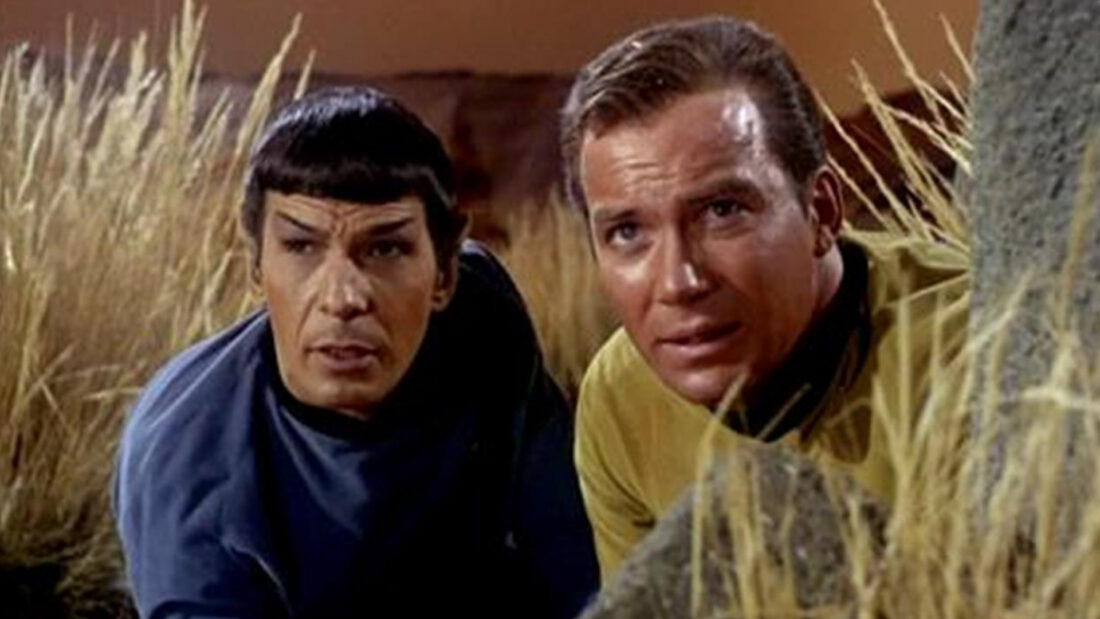
How do you solve a problem like ranking the first season of Star Trek: The Original Series? Granted, it doesn’t seem like much of a problem at the outset (it is widely considered to be one of the greatest first seasons in Star Trek and perhaps the best season of one of the franchise’s best entries), re-watching that season does reveal some undeniable problems.
Look, TOS will always have… elements that represent the very, very different time it was made in. Beyond that, it established unfortunate recurring concepts and archetypes that would haunt even later Star Trek series (depictions of not-creepy romantic relationships were still decades away). And while this season is sometimes remembered as a collection of all-time classics, episodes like “The Alternative Factor,” “Shore Leave,” and “Mudd’s Women” tend to shatter rose-colored glasses. Its sometimes unassailable status as the absolute best first season should be subject to more scrutiny than it sometimes is.
But when holding two thoughts, one must spare one for episodes like “Balance of Terror,” “Space Seed,” and “The City on the Edge of Forever”. Episodes like those not only established so much of what Star Trek would eventually become (as, obviously, the entire rest of the season did in some ways) but set high marks that writers are still reaching for to this day. The suggestion that someone must put themselves in a 1966 mindset when watching this show is sometimes used to dismiss valid criticisms. However, that mindset does also reveal the remarkable nature of a show that felt positively alien compared to most every other program of its era and still feels like making first contact with an advanced species when you watch it so many years later.
1. Star Trek: Strange New Worlds
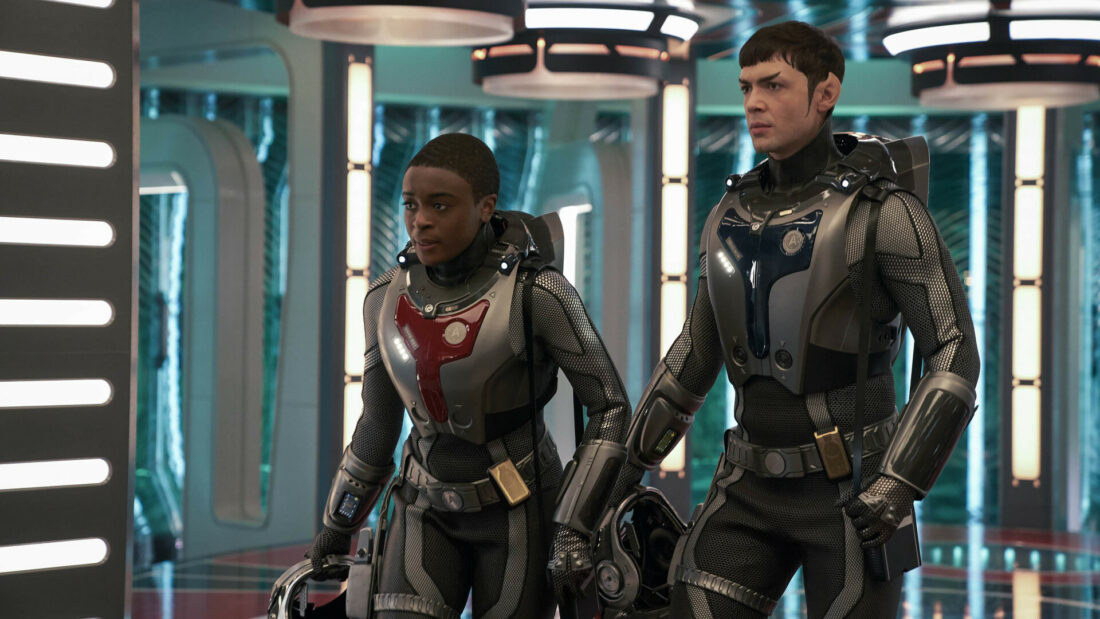
Yes, the calls for Star Trek to return to the way things were are often vague and annoying rally cries used by those who want the show to perhaps remain a little too stuck in the past. Star Trek should always strive to evolve. But in those cries, we find an idea that is consistent enough to approach being a truth. Star Trek is often at its best when it’s telling stories about a diverse crew of creative characters going on imaginative adventures week after week. The relative absence of such Star Trek stories in recent years only underscores the importance of occasionally updating and returning to them even while experimenting with new ideas.
It’s hard to imagine a modern Star Trek show that could do that better than Strange New Worlds. This story of the years leading up to the opening seasons of The Original Series is quick to woo you with its ‘60s (in our eyes, at least) style, familiar characters, and callbacks that operate as both Easter eggs and vital plot points. But Strange New Worlds isn’t trying to let TOS do all the heavy lifting. It’s trying to ask what that show may have looked like if it were made today.
And in its spectacular opening season, Strange New Worlds does just that. There’s really not a bad episode in its initial collection of 10 adventures, and most of them veer closer to “great” than “mediocre.” Many have asked for a Star Trek show that feels a touch closer to TOS and TNG. Who would have dared to dream of a show that offers all of that in its debut season while boldly exploring new frontiers?

Despite Trek having a tradition of changing the visual look as effects technology developed, Discovery managed the interesting trick of altering the presentation sufficiently for it to not land as Star Trek for me.
For some reason, the 1970s animated show didn’t air on any channel [1] I could get in the 1970s, so I’ve never seen it. I did read the Alan Dean Foster adaptations.
TOS did something I didn’t fully appreciate at the time, which was to recruit actual SF authors from time to time. This had a positive effect on the plots, I think, and more importantly was an income stream for authors in a genre that was still recovering from a major meltdown.
1: CKCO, Global, CBC, and CBLFT. Two of which were pretty grainy.
They have the animated series on Paramount+, if you wanted to check it out. As far as giving authors an income stream, TAS was able to recruit so many TOS-veteran writers because there was a WGA strike at the time, so a lot of live-action writers suddenly had plenty of time on their hands, and animation writing is a different union.
I’ve often wished the modern Trek shows would recruit more prose SF authors. TNG did it a couple of times. Diane Duane & Michael Reaves loosely adapted Duane’s TOS novel The Wounded Sky into “Where No One Has Gone Before” (although the show’s staff rewrote it almost completely). Peter S. Beagle wrote “Sarek.” “Tin Man” was adapted by Dennis Bailey & David Bischoff from their non-Trek novel Tin Woodman. Of course, Picard was co-created and showrun in its first season by Michael Chabon, though his involvement didn’t last.
“The Slaver Weapon” was written by Larry Niven, and gave us the animated version of the Kzin.
Yes, but I count TAS as a continuation of TOS, as there was a lot of writer overlap. I was focusing on the few examples in the post-1987 shows.
“The Slaver Weapon” was adapted from Niven’s “The Soft Weapon,” of course, and it’s strange as adaptations go. Usually an adaptation will change the original story to fit the series it’s adapted for, like “Tin Man,” which has only broad concepts in common with its source novel. But “The Slaver Weapon” adapts Star Trek elements to fit a nearly verbatim (if streamlined) retelling of “The Soft Weapon,” even leaving out Kirk, McCoy, and the Enterprise, while keeping the Known Space elements of the story virtually intact (aside from omitting the Tnuctipun). It’s barely a Trek episode at all — more like a Known Space episode with Trek characters understudying the lead roles. I sometimes think that Sulu and Uhura just convinced Spock to join them in a “Soft Weapon” holonovel in the holographic rec room introduced in “The Practical Joker.” (Although I guess that theory is scuttled by Lower Decks reaffirming that Kzinti actually exist in the Trek universe.)
Picard too, albeit by reference. (Riker: “We’ve had a little trouble around here lately with the Kzinti.”) But Lower Decks, perhaps not surprisingly, ran most enthusiastically with references to TAS, and not just the “prestige” episodes like “Yesteryear”.
(E.g., mentioning the giant Spock clone from “The Infinite Vulcan” in one episode, actually featuring his skeleton in another. and having William Boimler recall an encounter with an alternate universe version in a third.)
On the other hand, I don’t think the Slavers themselves have gotten a mention since “Slaver Weapon”.
I had watched the original in syndication at most a couple of times when ST:TAS (The Animated Series) came out and I regarded it as the 4th season of TOS.
I think if you’re ranking the quality of first seasons, that has to include their quality relative to what followed. For all its flaws, Picard season 1 is much better than either of the following seasons. At least it was trying to break new ground and move the franchise forward, like TNG/DS9/etc. did in their day, rather than just being extended exercises in nostalgia like the latter two seasons. Season 1 is the only one of the three that I’d ever want to rewatch.
TNG’s first season suffered from Roddenberry’s ill health and the improper behavior of close associates like his lawyer (who rewrote scripts despite having no right or talent to do so), and the way that behavior led the original creative staff to quit or get fired. It was more chaotic behind the scenes than any Trek first season until Discovery. Still, what a lot of people today don’t realize is that the rest of 1980s SFTV prior to 1989, with a handful of exceptions like the Twilight Zone reboot, Starman, and Max Headroom, was awful, so even TNG season 1 was head and shoulders above the rest. At least it had an intelligence and ambition its contemporaries mostly lacked.
It’s weird even to talk about TAS’s “first season,” because that’s 8/11 of the whole series, so there’s not much to compare it to. (Children are historically more tolerant of reruns than adults, and there are always new children starting to watch as others age out, so the common practice back then was to add only a few new episodes in an animated series’s second or later seasons, adding them to the ongoing rotation of reruns from earlier seasons.) Still, I can definitely say the animation was stronger in season 2, since season 1 was produced under an insane deadline crush, only 6 months to do 16 episodes, so a lot of corners had to be cut even by the standards of the limited animation of the day.
What stood out to me about DS9’s first season at the time was that it felt right out of the gate like a later season of TNG in terms of quality, because the writers and producers were already a well-oiled machine and comfortable with the setting. The fact that it doesn’t hold up well is a testament to how much the show improved from what was already a strong start.
I rank ENT’s first season above the second, and possibly above the third, since I preferred its episodic focus on exploration and character to big action and war stories. Season 1 had its weaknesses, but it was a nice attempt to show the early days of exploration with an inexperienced crew seeking its footing, and it had a subtle arc of humans and Starfleet gradually gaining a degree of acceptance in interstellar civilization. Season 2 just meandered without purpose.
SNW’s first season is definitely the best of that series, in large part because it’s the only season that actually delivers on its title and tells multiple stories about exploring new worlds rather than just revisiting old continuity or doing shipboard stories about character hijinks.
The key to appreciating 1980s visual SF is to watch all of 1973-1974’s The Starlost first.
I was talking about the quality of the writing in 1980s SFTV, not the visuals. Well, sometimes the visuals could be weak, especially when video effects started to be widely used, but TNG’s production values were top-of-the-line for their day.
I actually really like Discovery first season, other than its awful Klingon re-imagening. Obviously second season is the best, followed by first, third is pretty good, and then for me quality and interest diminishes with each season.
DSC’s reimagining of Klingons was no more drastic than TNG’s in 1979, and it’s pretty much a tradition for every new makeup artist to do their own version of Klingons and other aliens (Vulcans are the only ones who’ve been kept unchanged since the ’60s).
I’d probably rank DSC’s second season as its lowest. It did good work with Pike and Spock, but the storyline was a mess. Both its first two seasons suffered from the midseason firing of their showrunners (actually very early-season firing in the case of Bryan Fuller in season 1), so they were inconsistent and ended up not going where they were meant to at the start. The show didn’t really find a stable voice until season 3, when Michelle Paradise became showrunner and stuck around for the last three seasons.
Voyager is an interesting inflection point for the rankings. I think it’s first season benefits from not being appreciably worse than the rest of its series but isn’t noticeably better, either. If Voyager had been a become a better show, I think its first season would have ranked lower.
I’m extremely here for Prodigy, and would actually argue it’s better than Lower Decks Season 1, which struggled with having its A, B and C plots crammed into 25 minutes.
Prodigy manages the balance of arc narratives and standalone episodes better than any show of the revival era. In Rok-Tahk, Trek has a character for the ages: a hulking rock monster who turns out to be a shy young girl, then defies stereotyping to become the science officer.
It’s also up there with Picard (& arguably SNW, though I actually like season 2) in that the first season far outpaces what followed.
I agree that SNW s1 belongs in the one spot and TNG s1 probably belongs in the 12 spot (though I still give it points for trying something new, unlike, say, Enterprise season 1, which seemed to be running on the fumes of the Berman era).
I’d disagree on where most of the others are situated, though. In particular, I actually really liked Picard s1, and think it’s by far the best season of that show. Other than that, I was surprised by how much I enjoyed Discovery s1 when I rewatched it a few years ago, and how much I disliked season 2, which I remembered at the time seeing as a significant increment in quality.
Also, Prodigy s1 belongs ahead of Lower Decks s1, which has some episodes that just kind of feel mean-spirited.
I always felt that Lower Decks was better at telling straight-up, legitimate Star Trek stories than it was at being a sitcom. Its humor relied way too much on “Hey, you remember all these past Star Trek episode details? Let us show off how much we remember them too.”
I’m inclined to think that too, but I also know a lot of people who think Lower Decks is funny without having ever seen any of the other series it references, so there must be more to the comedy than that.
It’s a shame how Strange New Worlds went from such an outstanding first two seasons to such a crappy third season.
The writers say that the strike caused a bunch of undercooked scripts to be filmed. We’ll see when Season 4 comes out later this year.
Kurtzman’s ST is a different beast altogether and apart from sharing names with the previous series and movies it has nothing to do with them.
So, I would make a different list:
TNG
Enterprise
Animated
Voyager
DS9
OS
And for that list we are in agreement
If I’m being honest, I would happily take pretty much all of Kurtzman’s Star Trek over huge swaths of BermaTrek. I’ve never been on the “Fire Kurtzman” train, but I sure was on the “Fire Rick Berman” train back in the day.
I think it’s an oversimplification to ascribe too much importance to one person to the exclusion of their collaborators, particularly if it’s done out of the impulse to assign blame. That said, while Berman deserves a lot of credit for being a great producer on the logistical side, giving the 1987-2005 run of Trek just about the best production values and most impressive casts on commercial television at the time, he did have some creative preferences that were problematical, especially his refusal to allow LGBTQ characters and themes beyond the occasional vague allegory. A lot of people liked to rag on Brannon Braga’s showrunning during Voyager and Enterprise, but I’ve seen it said that the only real problem with Braga is that he wasn’t assertive enough or didn’t have enough of his own creative vision to push back against Berman’s ideas the way his predecessors did. (If you look at Braga’s overall showrunning career, it has no consistent voice or style to it; he’s a workmanlike executor of other creators’ ideas, or ideas he co-created with others.)
As for Kurtzman, I get the impression that he gives his showrunners a lot of autonomy to make their shows in their own ways, so the idea of “Kurtzman Trek” is perhaps off-base. I think the only show he directly ran was the bulk of Discovery season 2 after Gretchen Berg & Aaron Harberts were fired as showrunners after episode 4 or so. Though I think maybe he is responsible for the emphasis on big flashy FX and action often taken to ridiculous extremes.
I think there are a few things that you can legitimately fault Kurtzman for; like I assume that he must be behind the insistence on being “cinematic” (leading to the silly action climaxes and over-the-top special effects), and, if you’re a true believer, for not maintaining a strong enough line on the basic philosophy of Star Trek (the Section 31 movie being case in point).
I also think that his hands-off approach to his showrunners can sometimes lead to a lack of consistency (e.g., Picard season 3’s depiction of the Borg is really hard to reconcile not just with the first two seasons, but with Prodigy and Lower Decks as well), or to redundancy (e.g., Discovery, Picard, and Prodigy all had plots about Starfleet’s computer network being used against it; Picard and Lower Decks both homaged the “Mutara Nebula” sequence in the same year; episodes called “Kobayashi Maru” and “Kobayashi” aired within months of each other, etc.).
Yes, there are things we can criticize about the current era of Trek, but there are things we can criticize about every era of Trek. It’s never been a perfect series, just one with enough really good episodes, or at least good ideas and good actors and creative talent, that we’re willing to forgive the abundance of mediocre or bad episodes and problematical elements. Like, TOS was groundbreaking and envelope-pushing TV science fiction drama, but it was mired in the era’s sexism and stereotypes, it relegated its nonwhite main characters to supporting roles and never developed them, it was too driven by silly budget-saving tropes like Earth-duplicate alien planets, it had too many gratuitous tacked-on fistfights and formulaically required romances of the week, etc. And that’s not even getting into Gene Roddenberry’s behind-the-scenes issues as a producer/showrunner, or the fact that, aside from “The Cage,” the TOS episodes where Roddenberry had an actual writing credit are generally not very good. There’s no such thing as a perfect showrunner, or a perfect show. (Once I would’ve said DS9 was the best show, but in retrospect I’ve come to be aware of its serious problems arising from having an all-male writing staff that didn’t realize how misogynistic some of their ideas were.)
It’s just that it’s human nature, a well-understood psychological dynamic, that we gloss over the negatives in retrospect, creating the illusion that the past was better than the present when it really had just as much wrong with it.
Plenty of people said the same thing about the original movies, and about TNG, and about ENT, and about Kelvin. But every time, they eventually came to be seen as part of the unified whole of “real Trek” that the next new incarnation had “nothing to do with.” All this has happened before and it will happen again.
Before Enterprise came out, I remember some of the publicity mentioning that they were going to sort of model the show on Apollo 13. Which I took to mean that they were going to MacGyver their way through the stars with their just barely adequate tech. The decon gel, while also an excuse to get the cast disrobed, was perhaps a gesture in that direction. They didn’t do that, though. Very little happened where the technology was string and baling wire and they knew it.
WRT Discovery, I’m still bitter that they killed off Georgiou. Michelle wanted to be a continuing character. I’ve seen interviews where she describes asking them “you’re not going to kill me, are you?” What could have been?!?
The thing I remember most clearly about TNG was in the first season or two, the actors all looked like “where do I put my hands? Why don’t I have pockets?” 8-)
TNG deserves huge credit for being original. Unlike virtually every other series except for the original, TNG actually offered entirely new characters and stories. The others, even the really good ones, are much more derivative of what came before.
I don’t see much originality in a genre that is essentially cops and robbers in space, with rocket ships and ray guns instead of horses and six-guns, or car chases and machine guns. Women are moms and trophies for the white manly heroes, and people of color are barely extant. Discovery and DS9 tried the hardest, but they’re still human-style patriarchies, aliens are just weird-looking humans, every race has two sexes and monogamy and children, and men dominate everything.
TNG was more derivative than most people realize. It was largely a reworking of the abortive Star Trek Phase II revival series (not its actual name, just how it’s retroactively referred to for convenience) that was worked on in the ’70s before it evolved into Star Trek: The Motion Picture. The older, mentor-figure Kirk became Picard, Will Decker became Will Riker, and his empathic love interest Ilia became Troi (and I’m convinced there’s a Troy/Ilium pun in there). Data was a hybrid of Xon, Phase II‘s young Vulcan science officer who sought to explore his emotions to understand humans better, and the android title character of Roddenberry’s failed pilot movie The Questor Tapes (which was itself a reworking of the Assignment: Earth premise Roddenberry had tried and failed to get off the ground twice before, once as a standalone half-hour pilot and once as a backdoor-pilot Trek episode). Tasha Yar (who was originally going to be called “Macha” Hernandez) was a knockoff of Vasquez from Aliens. Geordi La Forge was named in honor of George La Forge, a young quadriplegic fan who became a cause celebre in fandom and died in 1975. (Uncredited TNG co-creator David Gerrold had previously named a character George La Forge in his 1981 Trek novel The Galactic Whirlpool.) Picard was also largely inspired by Jacques Cousteau.
But it’s true that TNG did strive to tell mostly new stories and build new parts of the universe. Indeed, I gather that Roddenberry saw it as a soft reboot rather than a direct continuation, and preferred to distance it from TOS as much as possible.
DS9 was largely built from concepts established in TNG — Bajor, Cardassia, wormholes, Trill — but it expanded on them and took them in new directions, and only infrequently told stories that were sequels or tie-ins to earlier series. As for Voyager, I wouldn’t call it derivative, because the Maquis storyline that was introduced in TNG and DS9 was created specifically to set up VGR in advance. (Which is ironic, because VGR did relatively little with it compared to later DS9.) I guess the most derivative thing VGR did was making heavy use of the Borg. Otherwise it relied mainly on original concepts.
Erratum: The Galactic Whirlpool was actually a 1980 release. I should’ve remembered that.
Thanks for that background, I knew some of that (largely, IIRC, from reading old comments of your in various rewatch threads) but didn’t know all of it.
But what you talk about is mostly behind the scenes stuff, things the average viewer of the first season of TNG wouldn’t have known about. I agree TNG season 1 was pretty dire. I distinctly remember getting annoyed when Channel 11 in NYC would show a TNG episode instead of a “real” Star Trek episode.
But I reiterate, though I freely concede I’m drawing from other seasons and not just season 1, that TNG deserves credit for creating a new universe instead of borrowing so heavily from what already existed. One could easily draw up half a dozen spinoff shows from TNG’s stable of supporting and guest characters. Only DS9 comes close. Although I really like SNW, I feel like the show has disappointingly turned into a prequel for TOS rather than its own show. So much of it is about Chapel and Spock, with further backstories about Uhura, Jim Kirk, Scotty, etc. Where are the strange new worlds? Who are the new characters who weren’t already in TOS?
Oh, certainly, The shows from TNG to ENT did a great job expanding the universe, while the modern ones have relied way too much on nostalgia and callbacks. Which is a problem with franchise media in general these days, really.
Although I do feel SNW has added a lot of novelty in developing characters like Una, Uhura, and Chapel who never got much development before. I think revealing things we never knew about familiar but underdeveloped characters and story elements can be as worthwhile as introducing new characters and elements. (But yes, I do think they need to start living up to the title again.)
I have a soft spot for early DS9 just for the excellent worldbuilding. Thanks to Season 1+2 Bajor feels like an actual place instead of 2 sets and a half-dozen extras we leave behind at the end of the episode.
Sometimes the worldbuilding was better than others. TNG established Bajor as an ancient and advanced starfaring civilization before the Cardassian occupation beat them down, but “The Storyteller” in season 1 painted them as a bunch of superstitious primitive villagers. (And unfortunately a number of early tie-in novels and comics followed suit.) I guess that could be handwaved as an isolated region that had regressed, but it was the show’s first depiction of a community on Bajor, and it wasn’t a good beginning.
Rating SNW’s first season so highly feels so alien to me that I immediately took it as performative; a gesture of goodwill toward an otherwise floundering Paramount. Opinions being what they are I’ll accept it as sincere, but even SNW’s first season is marred by bad priorities and worse ideas. It is better than what followed, though.
When have Star Trek fans ever pretended to like a Trek production more than they did? We’ve always been a tough audience. The only reason TNG’s first season was successful was because every contemporary SFTV show was so much worse, but even so, I remember it meeting with lots of fan criticism at the time.